
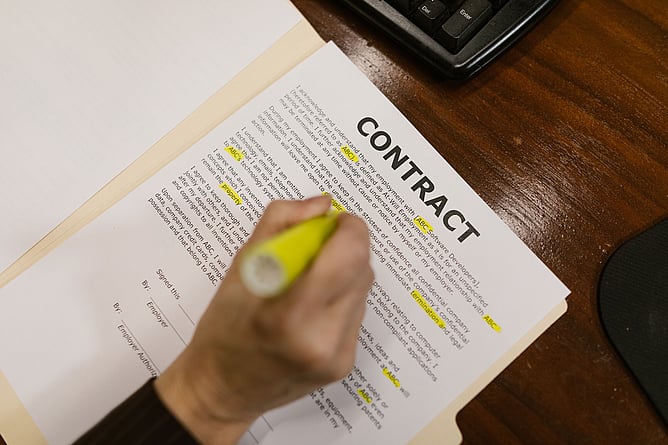
The principles of the Business Management of Logging (BMOL) guide is "to maintain productivity, financial health and goodwill in the industry. All parties involved in setting contract rates should be willing to arrive at a fair rate and have the understanding and knowledge to do so." Here are the top five clauses forestry contractors should try to negotiate into a forestry contract.
Annual Rate Review
Include a formal review of contract rates at least once a year.
Rates should be reassessed against actual business costs, including wages, machinery, insurance, compliance, and transport costs.
This helps ensure rates remain sustainable as market conditions change.
Cost Escalation Clause
Contract rates should automatically adjust for significant increases in costs such as fuel, transport, labour, and equipment ownership.
This protects contractors from absorbing unexpected cost increases during the contract term.
Compensation for Changed Harvest Conditions
If the actual operating conditions differ materially from those assumed when rates were agreed, a rate review should be triggered.
Examples include increased haul distances, steeper terrain, smaller piece size, lower productivity, or additional environmental constraints.
Minimum Work Volume Commitment
The contract should specify minimum annual production volumes or available work.
If the forest owner cannot provide the agreed level of work, the contractor should be entitled to compensation or a rate adjustment.
This provides certainty for contractors who have invested heavily in machinery and staff.
Clear Change and Payment Provisions
Any change in scope, additional work, or operational requirement should require agreement and attract appropriate payment.
Payment terms should be clearly defined, including invoicing processes and payment timeframes.
Strong change-management and payment clauses help maintain cash flow and reduce disputes.