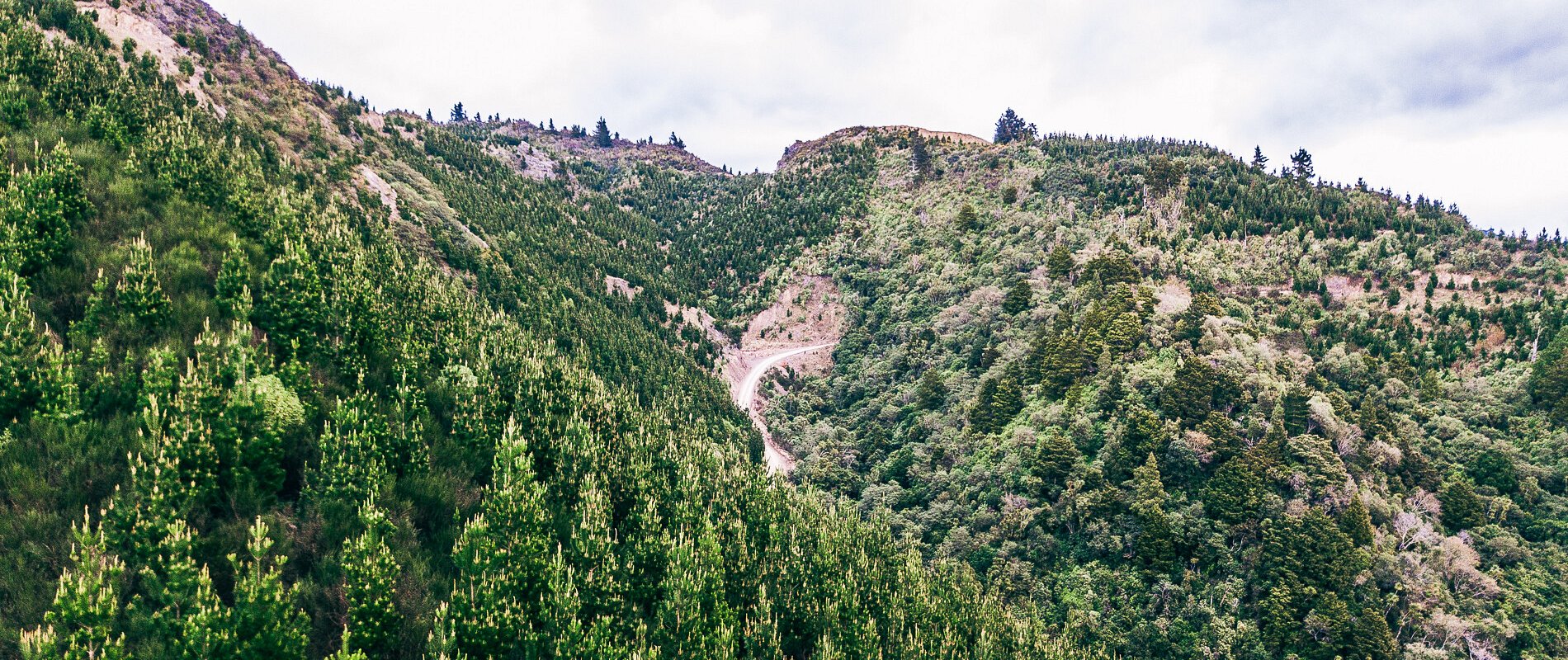
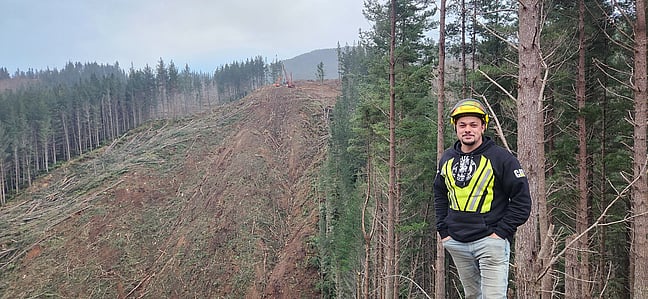
Tony Hill of Hill Logging picked me up at 6:00am for a visit to his steep country winch-assist (SWY) operation east of Mangatu Forest. Many readers will know Tony through his role as NZ Logger Magazine's "Iron Tester".
Tony comes from a logging family originally based in Tokoroa. When his father's contract ended, the family relocated to Tairāwhiti and Tony has spent much of his career on the East Coast, most recently working for Ricky Kuru before establishing his own business. Like many contractors in the region, Tony speaks highly of Ricky's role in mentoring operators and helping them transition into business ownership. Hill Logging is a great example of that legacy.
Today, Tony operates two crews in Tairāwhiti: a fully mechanised SWY operation and a fully mechanised ground-based crew. On the day of my visit, his father was working on a digger on the skid site.
That morning, Tony's main concern was a failed access road into his ground-based operation. The issue had been ongoing, leaving the crew parked up while waiting for the forest manager to complete repairs. Approximately 200 loads were sitting in stock awaiting transport to the port. His SWY operation had effectively been carrying the business during the disruption, but as Tony pointed out, downtime caused by infrastructure issues is not something accounted for in the Forme costing model.
Tony has recently invested in a new winch system that was featured in NZ Logger Magazine and is awaiting the arrival of a reconditioned Madill feller buncher. Given the significant cost of new equipment, refurbished machinery is becoming an increasingly attractive option for contractors across the industry.
Through his work as Iron Tester, Tony has gained valuable insights into a wide range of machines and operating systems, and it is clear he spends a lot of time thinking about equipment performance and productivity. When I asked him which feller buncher is best suited to Tairāwhiti conditions, his answer covered everything from geology and topography through to piece size, stocking rates, ground clearance, undercarriage design, slew power and harvesting head selection. If you're in the market for a feller buncher, a conversation with Tony would be time well spent.
Investing in People
One of Tony's key mantras is "no scratches on machines". While this may sound simple, it reflects the high standards he expects from his team when it comes to operating, maintaining and greasing equipment. From the housekeeping standards I observed, it is a philosophy that has been fully embraced by his crew.
Tony was particularly excited to introduce a new employee, just 16 years old, who is already showing tremendous promise across a range of machines. Like many young people, traditional education has not necessarily played to his strengths. While reading and writing may present challenges, he possesses outstanding hand-eye coordination and practical ability.
We discussed the need for training systems that better cater to these individuals and explored ways of attracting more young people into forestry careers. Tony shared several ideas that I intend to follow up.
Coincidentally, later that day I received a call from Stuart at NZ Logger Mag looking for story ideas. I suggested profiling five young people entering the industry, including Tony's latest recruit from Tairāwhiti. Keep an eye out for this in future editions of NZ Logger.
We also discussed Mike Hurring's forestry training school in Balclutha and whether it could service workers in Tairāwhiti. Tony was strongly supportive of the concept. I even suggested he might make a suitable guest tutor.
Productivity Is More Than Contractor Performance
The day spent travelling and talking with Tony was invaluable. These conversations allow me to test assumptions against reality and ensure FICA's advocacy reflects what contractors are actually experiencing.
After my visit, Tony texted to let me know the road into the ground-based operation had finally been repaired. Unfortunately, new issues had emerged. There were now truck shortages, and access problems were developing on the SWY operation. Several days later, crews in another estate were instructed to take three days off due to congestion at the port.
Too often, conversations about productivity focus solely on contractor performance and harvesting output. We need to change that narrative. Contractor productivity is heavily influenced by factors throughout the supply chain that are entirely outside their control.
When assessing productivity, we must look beyond the harvesting crew and consider the performance of the entire system, including infrastructure, transport, logistics, ports and regulatory processes.