As part of the roll-out of the consultation on vocational training, we delivered a presentation in Balclutha for the Southland/Otago region. Of all the vocational training meetings we have had over the past two months the meeting in Balclutha was the most interesting.
The real passion for training was apparent, driven by strong collaboration between contractors, forest owners and the local Competenz staff. Apparently, the training activity in Otago/Southland is second only to the CNI (and only just in terms of actual numbers) according to Competenz.
Based on my observations over the next couple of days, I was asking myself, is it a coincidence that a region with a collaborative focus on training has high productivity and the top H&S performance (FISC data) of all regions?
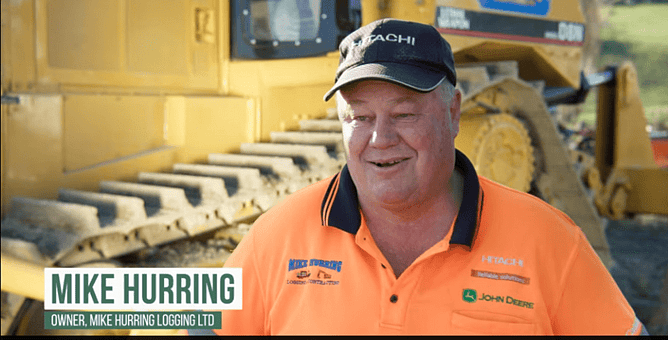
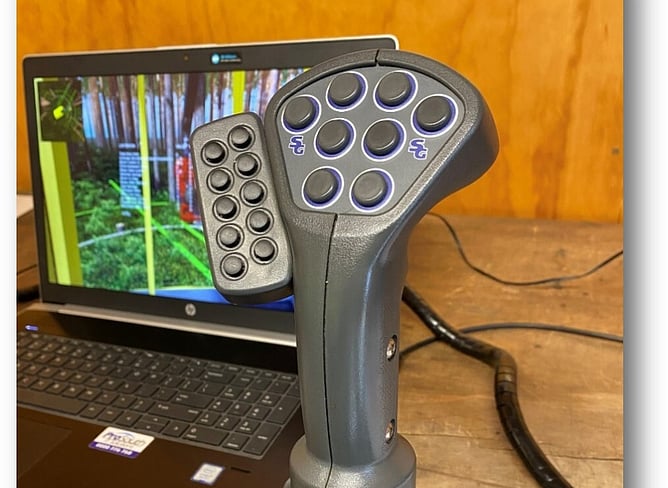
Balclutha is also home to the Mike Hurring Forestry Training school that I had heard so much about. FICA had recently assisted Mike fill a couple of vacant spots, so I was really keen on having a look. I was fortunate to spend a couple of hours with Mike at his yard and training school prior to the Vocational Training catch-up.
You have to be impressed with Mike’s energy and passion. In two hours, we covered off the training school, talked about the restoration job they had done at Skyline Queenstown, visited a logging job and inspected the contents of the first container that had just arrived in his yard with components for his pellet plant. I have to say Mike’s enthusiasm is contagious.
As Dr. Trevor Best, Asst Lecturer Forestry School, UofCant says:
"He has good reason to be enthusiastic. He's built the programme around the difficulties he has had himself in getting new operators up to speed. It gets the dreaded bookwork done and out of the way, it provides an opportunity for supervised machine time that doesn't get in the way of production, and it gives the trainees a chance to connect with those who will be dependent on the quality of their work - the log customers. There's a lot to be enthusiastic about!"
I really think there is opportunity to scale up Mike’s school. Contractors are really struggling to bring new entrants into the industry and manage the leap from QC to machine operator. There is an acute shortage of hauler operators, processor operators and steep slope operators. These are million-dollar machines with highly skilled and paid operators.
With the pressure on cost and productivity we all know there are light years in productivity between a competent highly skilled operator and someone not so competent. I believe if we sell the benefits to Industry, contractors will invest in the type of training Mike is providing and it should be able to fund itself. I also believe machinery manufacturers would also be prepared to jump on board.
As Trevor says - It's a programme built by a contractor for contractors. It is, therefore, highly relevant. It's a legitimate and recognised pathway into the industry. It allows contractors to take on school leavers and know what to do with them to get them up and running. It works. The current retention rate of Hurring's apprentices across five cohorts is 85%.
Based on my numbers, there are 498 (Forme 2025) harvesting crews in NZ. Based on FGR benchmarking data (see attachment) the number of machines in a harvesting crew has increased from 4.0 in 2008-10 to 8.5 in 2023-24. If we use 6 machines per crew as a conservative number that is 2,988 operators, if we have 5% loss of operators from the industry each year that is potentially 150 operators we need to be training each year.
My visit to catch up with Mike was long overdue and I’m looking forward to not being reminded of this next time we meet. I would be very interested in getting feedback from Contractors on whether there is sufficient demand within the industry to scale up Mike’s school.